
Le secteur de la restauration n'a jamais lancé autant de nouveaux concepts de restaurant en si peu de temps. Tasty Crousty, Krousty Sabaïdi, Chikin Bang, Chick Chill… En quelques mois, une nouvelle vague d'enseignes autour du poulet frit croustillant a littéralement explosé sur TikTok.
.webp)
Victor Pignolet
30
Mar 2026
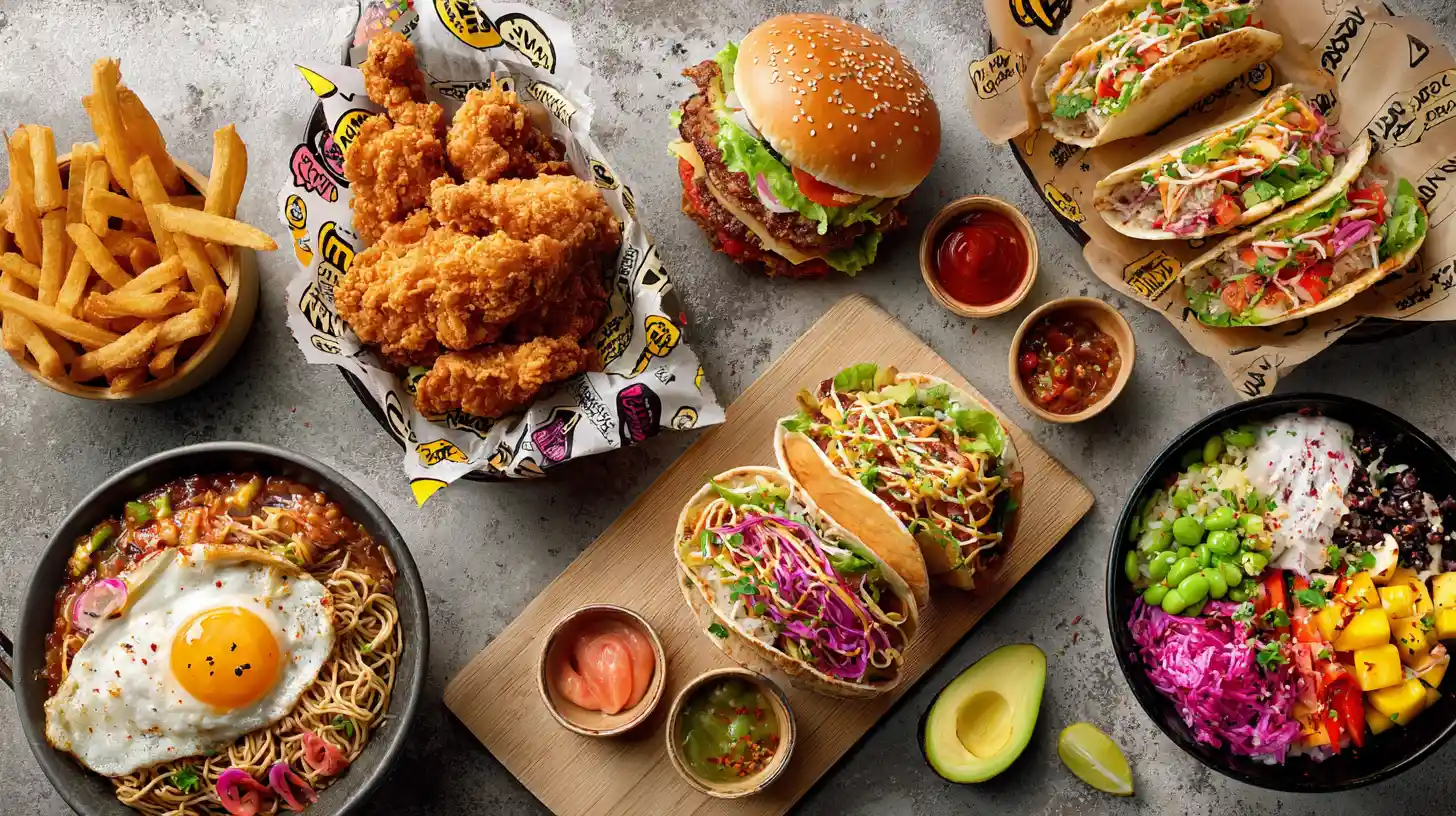
The hospitality industry has never launched so many new restaurant concepts in such a short space of time. From viral smash burger joints to premium kebab spots like German Doner Kebab... In just a few months, a fresh wave of gourmet street food brands has absolutely blown up on TikTok.
The hospitality industry has never launched so many new restaurant concepts in such a short space of time. From viral smash burger joints to premium kebab spots like German Doner Kebab, a fresh wave of gourmet street food brands has absolutely blown up on TikTok in just a few months. They have taken over dark kitchens and opened hundreds of sites. Instagram posts from these new setups are racking up millions of views, turning everyday street food staples into a fully-fledged market segment in their own right.
The catch? In this rush to open, very few founders anticipated the invisible mechanics that determine whether their restaurant concept will last three years or three months: their cost structure. Opening a trendy concept is the easy part. Maintaining your margins when suppliers hike their prices, footfall fluctuates, menus change, and consumer expectations shift at lightning speed is a completely different story.
In 2026, the UK hospitality sector might be boasting record revenues exceeding £100 billion, but insolvencies in the fast-food space jumped by 19% in the third quarter of 2025. This value growth masks a harsher reality: concepts that fail to master their food costs from the very first weeks of trading simply do not survive their second winter. Faced with today's industry challenges, ingredient inflation, squeezed profit margins, and accelerated digitalisation, choosing the right concept is a strategic business decision before it is a culinary one.
This article breaks down the major concept trends shaping the 2026 food scene, the profit margin opportunities they offer, and the operational pitfalls you absolutely must avoid.
It is the phenomenon of the moment in the hospitality industry. Over the course of just a few weeks in late 2024, a new take on the smash burger featuring ultra-crispy patties stacked with melted cheese and a signature house sauce went completely viral on TikTok UK. Demand was immediate, organic, and massive. Thousands of social media posts propelled this single menu item into a cultural phenomenon before the majority of restaurateurs had even heard of it.
Brands like Supernova or Bun & Sum were among the first to structure and scale this type of concept. Dozens of other independent joints and chains quickly followed, capitalising on the exact same core product. Even major players like Five Guys and Wendy's ramped up their game to defend their corner. This phenomenon illustrates an underlying trend that, from an operator's perspective, goes way beyond a simple fad: consumers are looking for new flavours, satisfying textures, and a dining experience that is affordable, fast, and highly Instagrammable.
The popularity of the concept attracts ill-prepared operators. The real danger: food cost creep on signature sauces and seasonings. These elements, often viewed as secondary, are actually among the hardest to standardise without rigorous spec sheets. In the quick-service restaurant (QSR) sector, the target food cost ratio sits between 25% and 35% of net turnover. A variance of just 5 points on this ratio is enough to completely wipe out your operating profit. Without strict spec sheets per SKU (Stock Keeping Unit), properly configured Kitchen Display Systems (KDS), and weekly waste tracking, the food cost of a smash burger concept can silently drift for weeks before finally showing up in the month-end reporting.
{{banner_clients}}
Among the most defining food trends of 2026, the hybridisation of formats is gaining serious traction in the hospitality sector. The idea: a single venue, multiple uses, multiple revenue streams. A coffee shop by day that turns into a mocktail bar by night, a bakery offering premium food-to-go at lunchtime, or a restaurant with an integrated deli or takeaway counter.
These hybrid concepts are a direct response to shifting consumer habits: customers no longer stick to rigid mealtimes; they choose where to eat based on their schedule, budget, and the experience they are after. A venue capable of offering several dining occasions under one roof naturally builds loyalty and optimises floor space utilisation throughout the entire day.
The interior layout of the space is designed so that customers can both dine in and grab products to take home. Local and seasonal goods, artisanal pantry items, and premium alcohol-free drinks curated by the chef. This model boosts the average transaction value and turns the venue into a daily touchpoint. This is exactly the approach taken by brands like Lina Stores in London: an Italian restaurant and delicatessen under one roof, open seven days a week, where customers can sit down for lunch and leave with artisanal pasta or a house-made sauce. It is a simple but incredibly effective concept for maximising revenue per square metre.
The modern bakery no longer survives solely on the morning bread rush. By introducing a hot food offering at lunchtime sourdough sandwiches, open toasts topped with roasted veg, or focaccia made with local produce it creates multiple revenue windows throughout the day. Chains like Gail's Bakery and Ole & Steen have long perfected this strategy, and plenty of independent bakeries are now following suit to protect their margins.
Hybrid cooking blends the culinary traditions of several cultures to create a fresh menu with unique flavours. Korean tacos, fusion ramen, or bowls that reinvent global dishes using local ingredients: this approach appeals to a curious customer base that craves diversity and is highly active on social media. The strength of these venues lies in their ability to tell a story through every plate. The success of brands like Afrikana perfectly illustrates this potential: as one of the fastest-growing African-inspired restaurant franchises in the UK, the network boasts steady growth and a massive social media footprint. It proves that a strong, unapologetic culinary identity is now a fully-fledged driver for business growth.
Au-delà du crousty, la tendance du concept de restaurant mono-produit confirme son statut de modèle dominant pour les nouvelles ouvertures en franchise. Un plat unique décliné, un territoire culinaire défini, une identité de marque limpide.
Dark kitchens are no longer a curiosity in the foodservice landscape. They have become the lowest-risk R&D tool to validate a restaurant concept before investing in a brick-and-mortar site.
The optimal strategy remains progressive disintermediation: start on platforms to build a customer base, then funnel towards direct click & collect to claw back commission margins.
'Fast good' is establishing itself as the new standard for accessible quick-service dining. From a consumer perspective, the value proposition is clear: fast-food speed, high-quality ingredients, and a refined culinary experience, even at the counter.
This positioning translates concretely into:
Chains like Leon or Pret A Manger understood long ago that customer satisfaction relies on a consistent culinary offering from end to end. It is no coincidence that these networks continue to expand in a sector where hospitality insolvencies remain up by +8% across UK venues in 2025.
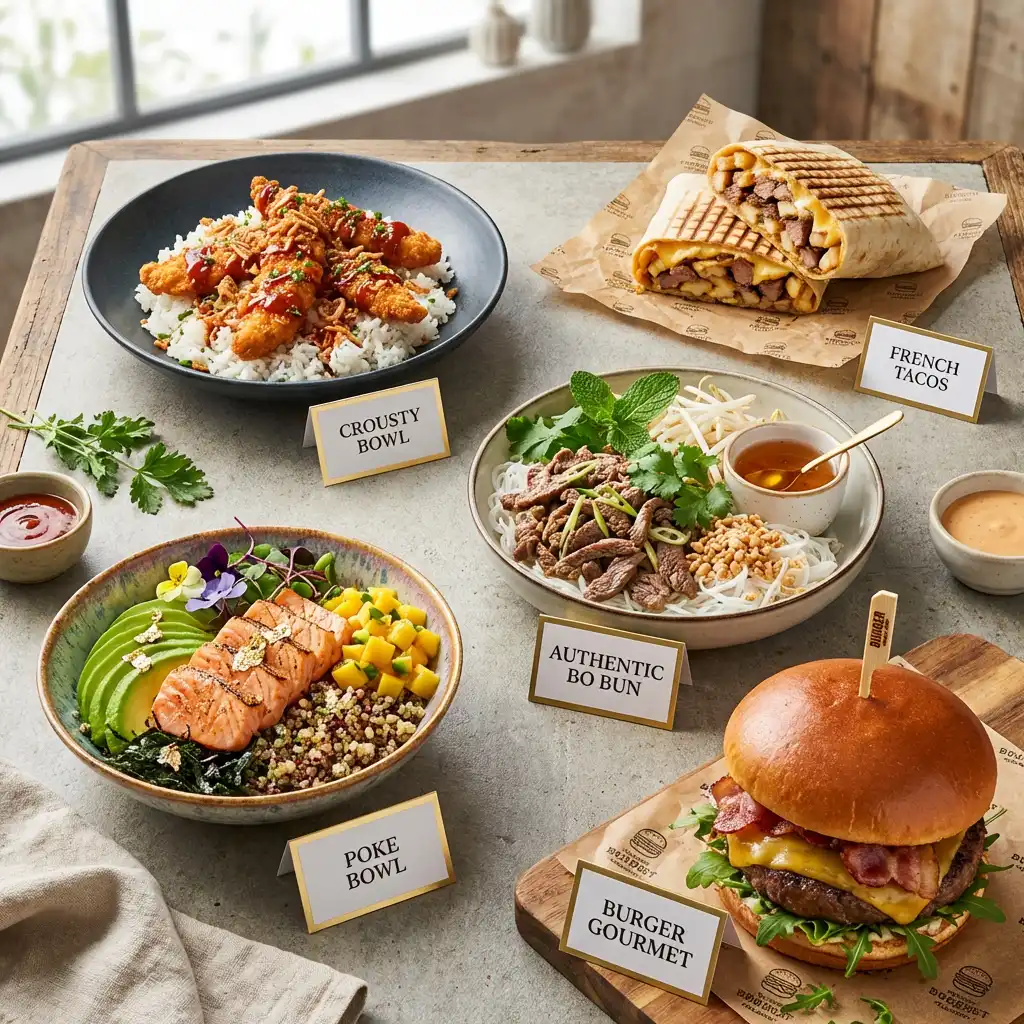
The modern food court or food hall is becoming a relevant format once again in high-footfall areas. Multiple restaurant brands under one roof, in a polished setting, with a shared experience and spaces that invite people to stay.
This dining venue offers a dual advantage: shared structural overheads and complementary offerings. A customer who doesn't find what they want at one concept will naturally move to the next, without leaving the premises. For an Operations Director looking to optimise business while mitigating risk, the food hall stands out as an ideal solution for testing multiple formats within a shared infrastructure.
Among the most remarkable 2026 food trends, immersion is establishing itself as a strong differentiator for traditional dining and haute cuisine. The meal becomes a culinary journey, a spectacle, a universe you step into.
Venues betting on this approach are completely rethinking their interior design: dining rooms transformed into themed sets, table projections, light shows, and menus aligned with a narrative. In Paris, restaurants like Under the Sea or Jungle Palace by the Ephemera Group plunge their guests into a fully immersive setting ocean, jungle, space where every dish extends the visual universe. Augmented reality is making its way into high-end restaurants: some venues now allow diners to view dishes in 3D before ordering, directly from their smartphone screen or via a QR code at the table. This is notably what French startup OCHEL, launched in February 2026, offers, or Le Magnifiko in Ivry-sur-Seine, one of the pioneers of the genre in France.
The culinary experience begins even before stepping through the door: online, on social media. The digital customer journey precedes and extends the physical experience. Restaurants generating viral content a beautifully presented plate, a chef's technique caught on camera, an authentic customer reaction benefit from organic promotion that no advertising budget can buy.
In 2026, live-fire cooking is making a major comeback in both high-end kitchens and accessible quick-service dining. Wood-fired cooking, charcoal grilling, and in-house smoking: the flame is becoming a proudly showcased culinary signature.
Fire draws people in as much for the flavour as for the spectacle. Charcoal-grilled meats reveal deep, smoky profiles impossible to replicate any other way. Vegetables roasted over an open flame develop caramelised textures that set a dish apart. In the dining room, an open grill or live tableside flambéing enhances immersion, making guests feel they are witnessing something truly unique. This sense of theatre has become a fully-fledged component of the culinary offering.
In 2026, there is no shortage of restaurant concept opportunities. Crispy chicken, hybrid formats, dark kitchens, premium 'fast good', immersive food halls: each trend holds a potentially robust business model. Gastronomy is reinventing itself, flavours from across the globe are hitting our plates, augmented reality is enriching the dining experience, and French cuisine itself is being reinterpreted with new techniques and flavours.
But the recent history of the hospitality sector is clear: concepts that disappear do not die from a lack of ambition or a poor product idea. They die from loose stock control, a food cost that is never truly mastered, and an inability to scale without losing control of key ratios. Even the Michelin Guide features establishments struggling to make ends meet: the net margin of a starred restaurant caps at between 3% and 4%. From a profitability standpoint, no segment is safe. Trends attract customers. Operational strategy builds the network.
Launching or expanding a concept in 2026? Speak to an Inpulse expert to optimise your operations, automate your ordering, control your ingredient costs, and protect your margins from your very first site to your hundredth. 👉 inpulse.ai




The all-in-one AI platform that guarantees margins for restaurants chains and bakeries.


Inpulse needs your contact information to let you know about our products and services. You can unsubscribe at any time. For more information, read our Privacy Policy.
© 2026 Inpulse. Tous droits réservés. Legal information
Politique de confidentialité.






.webp)

