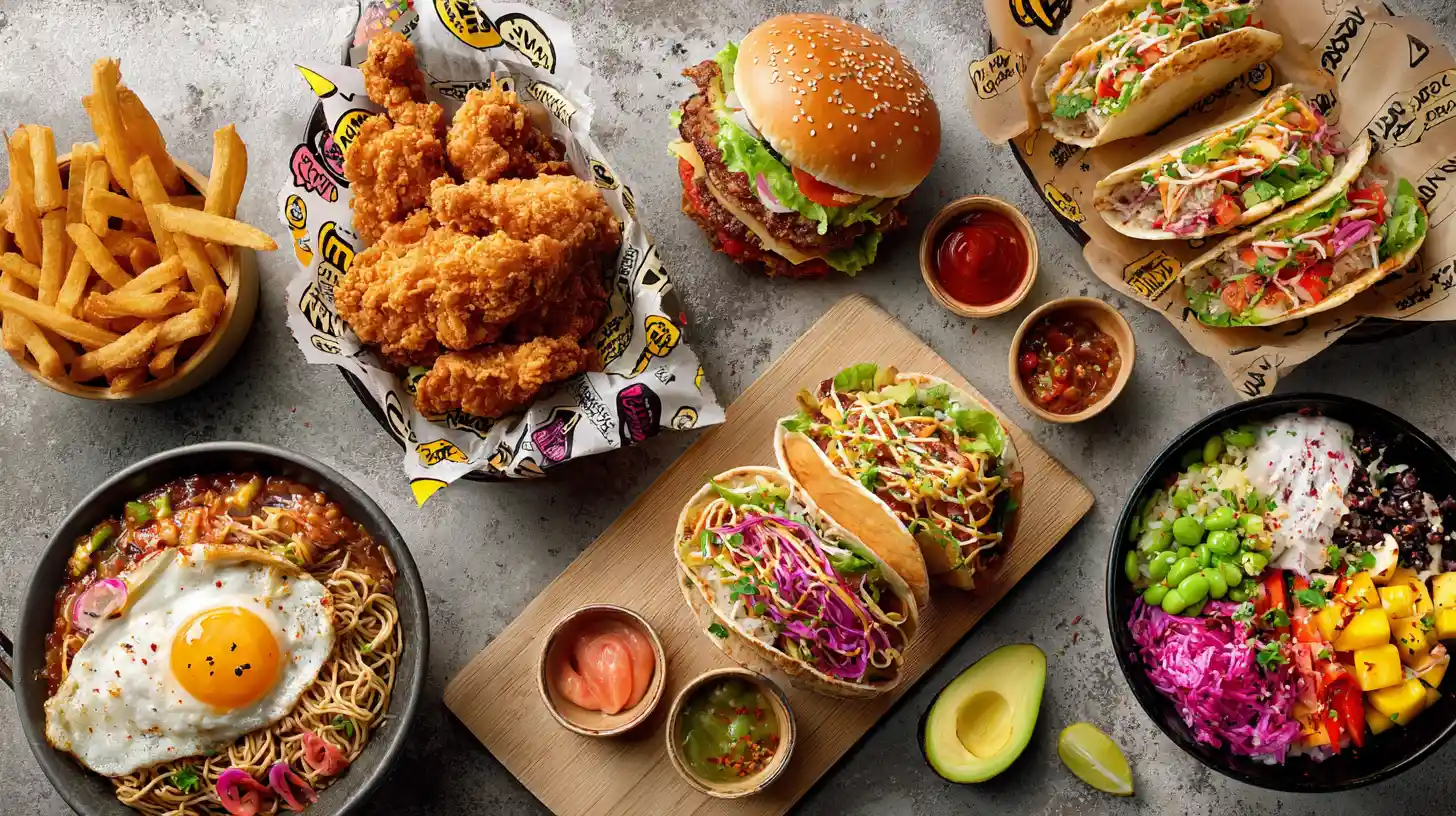
Purchasing management is one of the major challenges for catering professionals. Between budget control, maintaining culinary excellence and organising supplies, every restaurant owner must juggle many variables.

Manon Roy-Chevalier
2
Dec 2025

Purchasing management represents one of the major challenges for professionals in the hospitality sector. Far more than a simple expenditure line, it's a strategic function that directly impacts your restaurant's profitability and efficiency. Between budgetary control, maintaining culinary excellence and organising supplies, every restaurateur must juggle numerous variables to ensure their business's profitability.
In a sector as competitive as hospitality, where raw materials account for between 28% and 35% of turnover, every pound saved on purchasing translates into direct profit. A methodical approach and appropriate tools can transform this constraint into a genuine competitive advantage.
In the restaurant industry, raw materials typically represent between 28% and 35% of turnover. This considerable proportion makes purchasing a fundamental lever for improving your business's margin and economic viability.
Effective purchasing management goes well beyond simply placing orders. Rigorous management enables you to:
Restaurants that neglect this aspect often see their expenditure spiral and their reputation deteriorate. The primary objective is to create an efficient system that will optimise every pound invested.
All optimisation begins with a precise analysis of your operational needs.
For each dish on your menu, creating a kitchen technical specification is a non-negotiable step. This essential tool must include:
These specifications enable you to:
This analysis must take into account your restaurant's footfall, the seasonality of produce, and the specifics of your culinary menu. Use data from your till software to anticipate demand and adjust your orders.
This methodology allows you to know your daily requirements precisely and avoid errors that generate waste. Using a precise specification document will also facilitate communication with your commercial partners.
Supplier selection shouldn't be based solely on pricing. Your suppliers are genuine strategic partners; their selection is crucial for your business's sustainability.
A complete evaluation must include:
Product excellence: Verify certifications, visit facilities if possible, and test products before committing. The quality of raw materials directly impacts that of your culinary creations.
Partnership reliability: Assess delivery punctuality, responsiveness to problems, and ability to adapt to specific requests. A reliable supplier prevents shortages that disrupt your operations.
Commercial conditions: Negotiation isn't limited to pricing. Also negotiate payment terms, delivery times, and return conditions. A good supplier should allow you to pay according to your cash flow constraints.
Geographic proximity: Prioritising local suppliers offers numerous advantages: reduced transport costs, product freshness, support for the local economy, and the possibility of developing a short supply chain offering.
Diversifying supply sources limits shortage risks and enables better commercial condition negotiations. Create an evaluation list comprising delivery times, product quality, and compliance with ordered quantities to identify the most efficient partners.
A well-defined process is key to avoiding oversights, duplicates and costly errors.
Establishing a structured ordering process prevents oversights and duplicates. Use standardised order forms that should clearly display product names, quantities and unit price excluding VAT. Establish a regular delivery schedule with your main partners.
Systematic inspection of goods upon arrival is a regulatory requirement and an economic necessity. With each delivery, systematically check the conformity of delivered products:
This critical phase enables rapid identification of malfunctions and preservation of your preparations' excellence. Daily monitoring is essential for maintaining a consistent quality level.
Rigorous stock management relies on permanent monitoring and regular information updates. Good stock management allows you to find the right balance: avoiding losses whilst never running out of products.
Organise weekly counts for perishable produce and monthly counts for dry goods. This regularity enables rapid detection of discrepancies between theoretical and actual stock, and identification of waste sources.
Using barcodes and scanners facilitates this task and limits input errors. Some restaurants even use RFID tags to completely automate the process.
Establish a stock rotation system to prioritise using the oldest products. Precise monitoring of expiry dates prevents waste and guarantees food safety.
Modern technologies generate automatic alerts for products approaching their expiry date, enabling optimal valorisation or alternative transformation.
Determine minimum and maximum thresholds for each product based on average consumption, supply frequency, and seasonality. This technique prevents both shortages and overstocking.
In the digital age, managing purchasing without appropriate tools has become counterproductive. Modern technologies are valuable allies for improving efficiency.
Suitable management software centralises all information relating to your supplies. The solution offered by Inpulse enables tracking of the entire supply chain: from price lists through to product delivery.
Thanks to automated supplier ordering, Inpulse automatically generates the purchase order based on the restaurant's needs and the supplier's logistical conditions. Orders are sent directly via the software by email or EDI connection.
Modern till software analyses commercial data to identify trends, automatically calculate raw material requirements, and trigger alerts in case of low stock. Inpulse is now integrated with over 70 POS systems, enabling automation of theoretical stock levels in real time.
Complementary tools also automate invoice processing, from receipt to payment, by checking document conformity and identifying duplicates.
{{banner_inpulse}}
Precisely calculate the cost of each culinary creation by incorporating raw material pricing, as well as labour costs and fixed charges. Regularly update these calculations based on changes in partner pricing.
Negotiations aren't limited to pricing. Also negotiate payment terms, volume discounts, additional services, and quality guarantees. A win-win relationship improves services and can lead to preferential conditions.
Identify waste sources: overproduction, poor storage, unsuitable portions, or defective stock rotation. Every pound saved on waste directly impacts your profits.
Establish a dashboard with fundamental indicators: material expenditure/turnover ratio, waste rate, stock turnover times, and profit per creation. With Inpulse, it's possible to centralise this data and facilitate its analysis.
As you'll have understood, rigorous purchasing management in your restaurant requires a methodical approach combining needs assessment, rigorous supplier selection, and use of appropriate technologies.
By implementing a structured strategy – needs analysis via detailed technical specifications, rigorous supplier selection, flawless ordering and receiving processes, and optimised stock management – you'll regain control of one of your largest expenditure items.
The initial investment in time and tools rapidly translates into significant benefits for your results: a significant reduction in waste, improved dish quality, and a margin increase that can reach up to 5 points with Inpulse.
Ready to transform your purchasing into a powerful profitability engine? With Inpulse's artificial intelligence, over 4,000 clients have already optimised their purchasing management. Want to control your restaurant's costs? Discover how Inpulse can help you optimise your network's operational processes. Book an appointment for a personalised demo today.




The all-in-one AI platform that guarantees margins for restaurants chains and bakeries.


Inpulse needs your contact information to let you know about our products and services. You can unsubscribe at any time. For more information, read our Privacy Policy.
© 2026 Inpulse. Tous droits réservés. Legal information
Politique de confidentialité.